Every tree has a character, and every piece has a story. Ours begins when raw timber enters the workshop. Traditional joinery, years of experience and careful handwork turn a natural material into part of a home.
A workshop story · Qurbouse Woodworks
Concept illustration created for this editorial story; it is not a documentary photograph of the Qurbouse workshop or a specific timber batch.
Made, not rushed
Seven stages. A piece made for a life at home.
Furniture making is more than cutting and joining boards. Each Qurbouse piece is worked on individually rather than moving along a production line. Machines assist with accurate operations; selection, preparation, assembly, checks and finishing still pass through the makers’ hands.
Material, character, purpose
Choosing the right wood.
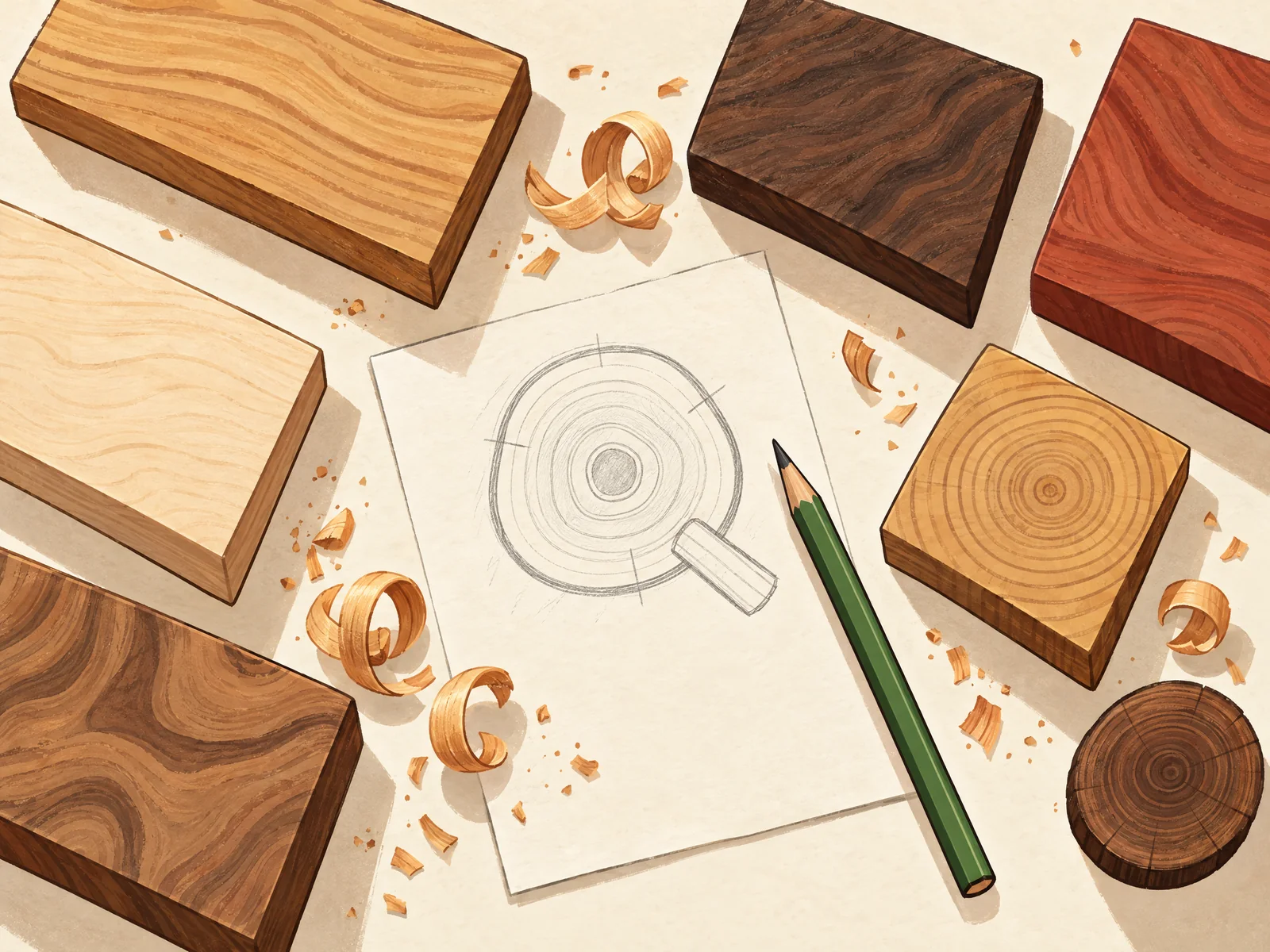
The workshop mainly uses Russian pine and Russian spruce, with oak, walnut, chestnut and iroko for selected designs. The grain, workability, intended use and setting all inform the choice. The notes below distinguish the workshop’s trade names from what published sources can verify.
Concept illustration of material study; the pictured samples are not identified as Qurbouse timber species.
01 · MAIN TIMBER
Russian pine
The workshop reports using it mainly for its natural texture, grain and workability in rustic, timeless designs. “Russian pine” is a trade label, not proof of one botanical species. If a batch is verified as Scots pine, sources describe pale yellow sapwood and light reddish-brown heartwood; natural decay resistance varies. [1][2]
02 · MAIN TIMBER
Russian spruce
The name alone does not identify a species: published sources use “Russian spruce” for different spruces in different contexts. If a batch is verified as Picea abies, it is described as light cream-coloured and straight-grained; heartwood decay resistance is rated low to non-resistant in one specialist database. These details are not assigned to unverified Qurbouse stock. [3][4][5]
03 · SELECTED DESIGNS
Oak
“Oak” covers different species and commercial groups. Colour and natural decay resistance vary; USDA sources distinguish red and white oak, and caution against assuming every white-oak piece will be durable in ground contact. No single oak species is claimed for the workshop’s supply. [6][7]
04 · SELECTED DESIGNS
Walnut
American and European walnut are distinct woods, with differences in colour, grain and natural decay resistance. Because the workshop has not specified which walnut is used in a particular design, a species-specific durability rating is not assigned here. [8][9]
05 · SELECTED DESIGNS
Chestnut
The commercial name can refer to more than one species. Published descriptions note a pronounced, often coarse grain, while colour, working characteristics and natural decay resistance vary with the species and source. No single chestnut rating is claimed for the workshop’s material. [10][11]
06 · SELECTED DESIGNS
Iroko
Iroko is used commercially for two closely related Milicia species. Its heartwood is generally rated decay-resistant, while reports on termites and marine borers vary; interlocked grain and mineral deposits may make machining more difficult. Natural resistance is not waterproofing or an outdoor-use guarantee. [12][13]
A trade name alone cannot confirm botanical identity. Species-level colour and durability data apply only when the timber is verified as that species or group. Natural decay resistance is different from the effect of a protective finish, moisture conditions or the suitability of a specific location. The cited sources describe general wood properties, not a laboratory test of a Qurbouse product. Wood-identification guidance.
01
Begin with purpose
Choose the right timber.
A good piece begins with choosing material for the design. The makers consider the grain direction, natural texture, intended use and the environment where the furniture will live—not appearance alone.
For work intended to face outdoor conditions, wood species and protective surface treatments are considered in relation to moisture, sunlight, temperature changes and weather. This is a description of the workshop’s decision process, not a claim that every listing is suitable for outdoor use.
02
A steady beginning
Start with kiln-dried timber.
The workshop’s stated rule is to use kiln-dried lumber whose drying process is complete. Wood continues to respond to changes in moisture and temperature; insufficiently dried timber can contribute to unwanted movement, cracking or changes in dimensions.
Proper drying does not eliminate wood movement, but it helps the makers work toward more balanced, durable and long-lasting furniture. For Qurbouse, quality begins before the first cut.
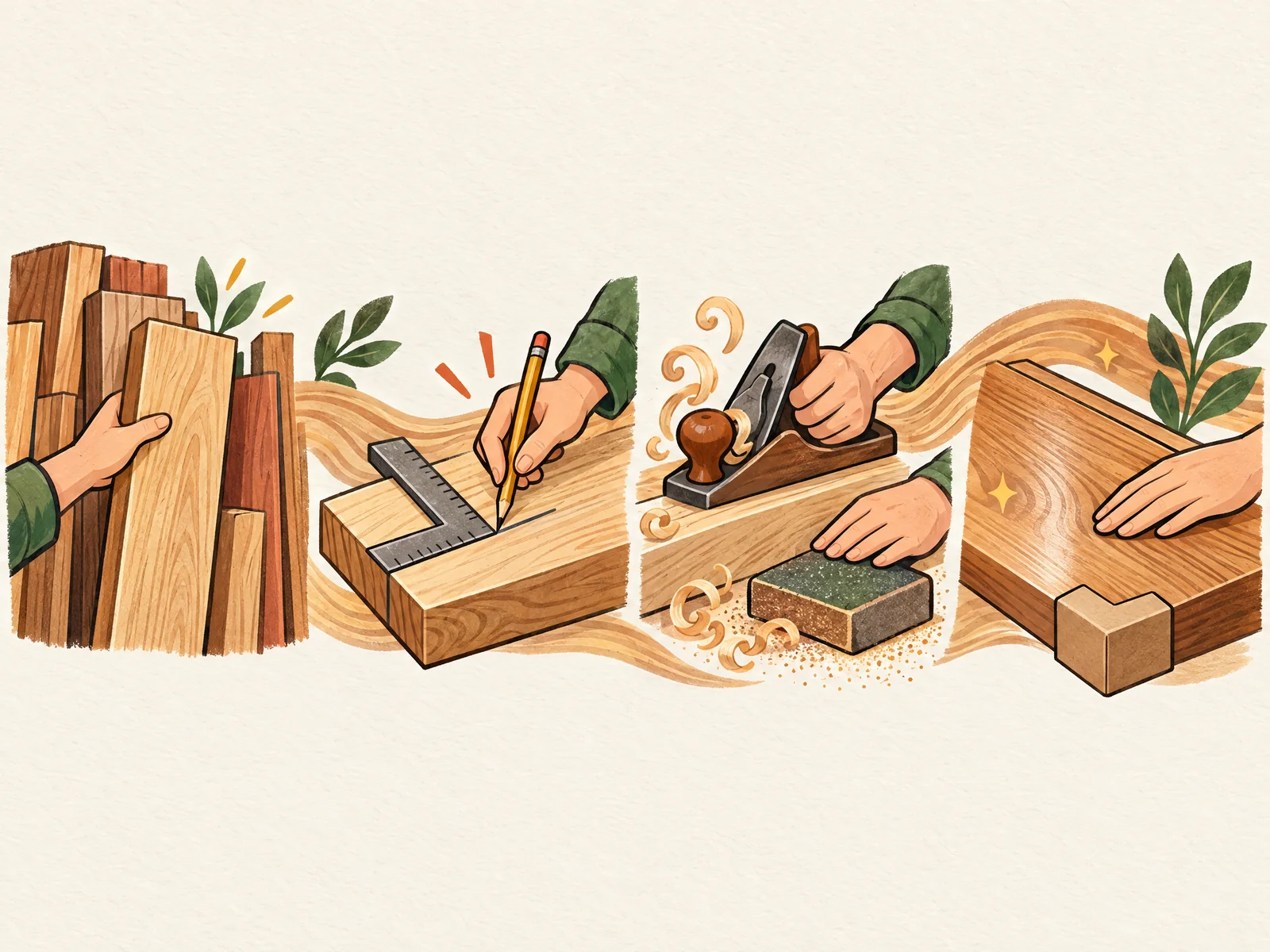
Concept illustration of measuring and handwork; it is not a photograph of a specific Qurbouse production session.03
From board to form
Measure, cut, join and shape.
When the timber reaches the workshop, each piece is considered in relation to the dimensions and needs of its design. Grain direction, natural texture and character help guide the work.
Measuring, cutting, surfacing, joinery and shaping are part of the process. Machines assist with the work, while makers prepare and inspect every piece, assemble it and complete its final details by hand. Qurbouse describes its production as individual work—not a line of identical pieces.
04
Feel the surface
Sand by hand, in stages.
Surface preparation is one of the stages that may be easy to overlook but matters to the finished piece. Each component is carefully sanded at different points in production; edges, corners, joints and touch surfaces are checked one by one.
Where needed, more than one sanding stage brings out the wood’s natural texture. Rustic and distressed designs may receive additional surface treatments that emphasize the material’s character.
05
Finish for the intended use
Colour, protection and final coat.
Colouring, distressing, oiling or varnishing is selected for the design and intended setting. Before the final coat, every surface is prepared carefully.
The workshop says it considers the product’s use when selecting protective finishes, and does not apply the same protection approach to indoor furniture and outdoor pieces. A finish is part of the design and care of a piece; it is not a promise of waterproofing or suitability for every weather condition.
06
Before it leaves
Inspect every detail.
A finished piece does not move straight to packing. Surfaces, joints, edges and overall workmanship are checked. Depending on the design, the makers also review connectors, doors, shelves, legs and other details, then make final adjustments or touch-ups where needed.
For the workshop, ready to leave means more than looking finished: it means reaching a level of workmanship the makers can stand behind.
07
Care continues
Pack thoughtfully for the journey.
Production is not over when the last coat has dried. Packaging is planned around the item’s size and sensitivity; corners, surfaces and parts that could be vulnerable in transit receive additional protection.
Where a design is suitable for flat-pack shipping, components are prepared with safe transport and straightforward assembly in mind. After packing, the item is handed to the delivery service; the workshop’s care continues through the hand-off without promising a particular carrier, destination or delivery time.
The workshop process above is based on the makers’ supplied account. External references below support general wood descriptions only; they do not identify the supplier batch used in any Qurbouse listing. Botanical names are not inferred from trade labels.